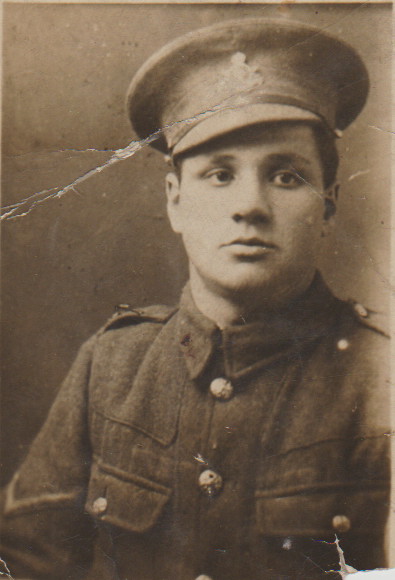
Britain declared war on Germany at 19:00 UTC on 4 August 1914 (effective from 11 pm), following an “unsatisfactory reply” to the British ultimatum that Belgium must be kept neutral. On 7 August Lord Kitchener made his first appeal for 100,000 new recruits. A month later on 4 September George William Fynn (21 years and 355 days old) lined up with the other 750,000 volunteers who had swamped recruiting offices around the country.
We don’t know what factors made up George’s mind to enlist in September a month after Kitchener’s appeal. There may have been an initial wave of patriotism and adventure that attracted early recruits but by early September (if the news was being reported – have to check Wakefield Express) the British Expeditionary Force (BEF) made up of the regular professional army had been in full scale retreat since the Battle of Charleroi on August 23rd. It is possible to imagine that George and other recruits at this time were soberly responding to the very real existential threat of the German war machine to both Britain and France. It’s also possible he fancied a change of scene, by 1914 he’d been working in coal mining for nearly 10 years and had few prospects.
Whatever his motivations George took the King’s Oath and enlisted in the King’s Own Yorkshire Light Infantry (15338) at Wakefield’s Recruiting office. On the same day he had a medical examination and was reported to be in good health, 5′ 6.5″ in height, 149lbs in weight and with a pulse rate of 78. He had taken the first steps on the road to what became the Battle of Loos. The Army seemed unprepared to receive immediately the numbers who had come forward and so George went home. Hopefully, he celebrated by having a few jars around Wakefield with with his mates. He then spent the next 10 days putting his affairs in order, he probably had to put a few final shifts in at Parkhill Colliery spent more time with Mary his wife of just over a year and Irene his four month old daughter (the author’s maternal grandmother). He “Rejoined the Colours” according to his Service Record on 14th September 1914.
Kitchener’s Mob

The day before George rejoined, Army Order 388 determined that he would be rejoining Kitchener’s Third Army Group (K3), V Corp, 21st Division. At the time of writing its not known which Brigade and Battalion he joined but it seems most likely that it would be the 64th Brigade, 9th (Service) Battalion King’s Own Yorkshire Light Infantry (KOYLI) formed in Pontefract. His next stop after Pontefract Barracks was training on Berkhamsted Common (trench digging!), Halton Park (Tring) in October 1914 and a period in Maidenhead. On 8th February 1915 George was transferred to the Army Cyclist Corp (formed 7th November 1914) and in to 21st Divisional Cyclist Coy (Company is 80 to 150 men) supplementing the “mounted” component of the Third Army Group’s 21st Division. The Battalion returned to Halton Park in April 1915 and it seems likely that the Cyclist Coy remained attached. (Order of The British Army 1914 Rinaldi R. A. 2008)
By all accounts the Army struggled to procure 750,000 uniforms, insignia, boots and arms etc. New recruits during late 1914 and early 1915 typically found themselves living in tents, wearing their civilian clothes and drilling with wooden rifles. Basic training comprised 13 weeks of drill, marching, discipline, constructing trenches, fire arms practice. George’s medical record shows he spent 12 days in the camp hospital from 9th May with a sprained ankle!
Did George actually get a bike!
We’ll never know if George every received a cycle. It seems unlikely but it would be nice to think he did and at least got to spend some of his time tootling along the back lanes of Surrey and France en route, possibly on a 1914 Raleigh .
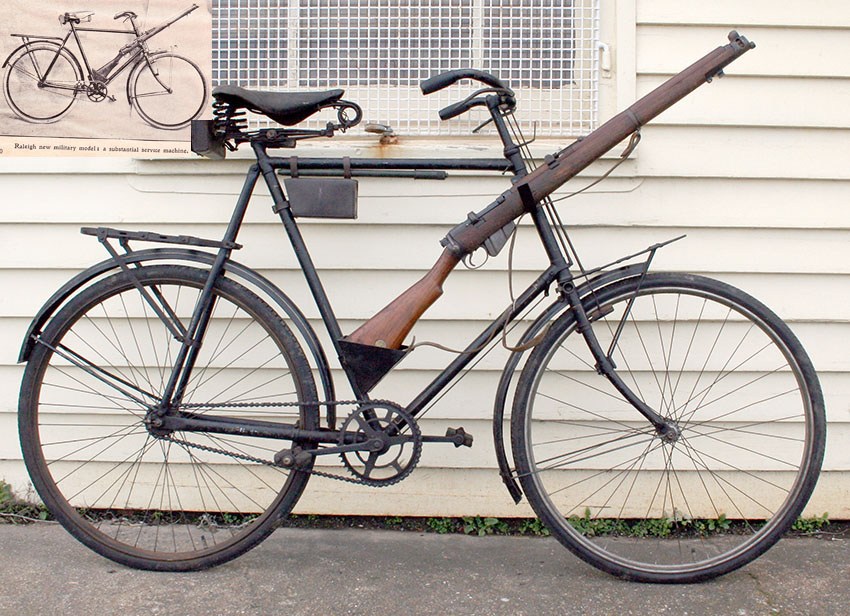
It’s lost from family history now whether George had leave during his 11 months of training, any letters home were lost in one of the many moves Mary made in her later life. He certainly had an opportunity after joining the Army Cyclist Corp to sit for a photograph and this found its way to Irene.
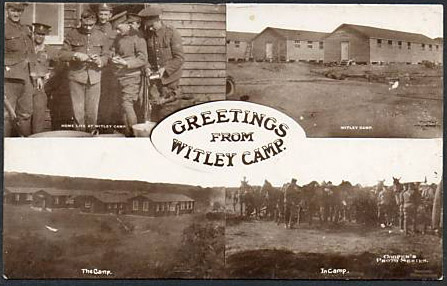
By August he was in Witley Camp where basic training was completed and they awaited their marching orders.
The Big Picture
Far away from the training camps of southern England events were unfolding that would determine the fate of George and his comrades. Following the Great Retreat by the BEF and French Fifth Army of August and September 1914 and the Race to Sea, the BEF and French Armies first halted the German advance and then pushed back. By early 1915 the war of movement had ended, both armies dug in and the Western Front became two defensive lines. The German advance and containment in some part had been made possible by Russian successes on the Eastern Front which required greater German attention. (The Russian departure from the war in 1917 would go on to impact a second relative, Cyril Thorp in 1918)
The Russian advance was halted and pushed back by the Central Power’s summer offensive leading to a second Great Retreat. This was of concern to the British and French, the collapse of the eastern front would free up Central Power’s forces for the Western Front. A major allied offensive in 1915 could give the Russians some relief. That offensive would take place along the front near Loos and would rely on the 1914 draught.
The route to war
The marching orders that would lead George to front line action came on Thursday 9th September 1915. The story is picked up again by his Unit’s War Diary. It records that the 21st DCC at 4:30am they left Witley Camp for Southampton. The “Weather very fine”.
At 7.30pm that same day they embarked for France. The night crossing to Le Harvre took around 13 hours with disembarkation at 9:00am on Friday 10th Sept. The day was then presumably spent unloading themselves and their gear from the ship to the train north to Saint-Omar, departing at 10:30pm. The troop train arrived at St Omar on Saturday at 4:30pm and was followed by a 2+ hour “march” north to their billet in the town of Watten. The diary author’s references to “marched” suggests that Divisional Cycle Coy did not indeed have cycles! Watten would be their home for the next 12 days.
- Tuesday, 21st Sept. Wittes.
- Wednesday, 22nd Sept. Ames.
- Thursday, 23rd Sept. Ferfay.
- Friday, 24th Sept. Ferfay
- Saturday, 25th Sept. Hallicourt to west of Vermelles
Battle of Loos
The 21st Division were earmarked as a reserve division charged with following on to take up positions behind and relieve the first wave of front line troops. DCC had been marching steadily towards the front since departing Watten on Monday. The fine weather enjoyed since leaving Witley gave way to rain on Friday night 24th/25th as DCC made its way from Ferfay to Haillicourt.
Saturday 25th Sept
The Battle of Loos began at 5:50am Saturday 25th September 1915 with an artillery barrage of the German frontlines, designed to cut the wire and push back the defenders of the first line trenches. Gas was also deployed. When the attack began DCC had reached Haillcourt 10 miles to the west of the front line but they would have been keenly aware of the tumult to the east. At two o’clock on Saturday afternoon DCC moved towards the front from “Haillicourt to west of Vermelles” where the company spent another wet night. The 21st Div were slowly progressing to the front and in to battle. They arrived at Le Rutoir Farm around 10:00pm and picked their way to the Loos-Haines Road to the south east, arriving around 1:00am on the 26th.
Sunday 26th Sept – Monday 27th Sept.
21st Div received new orders from General Haigh’s H. Q. at 2:00am. These tasked the 21st and 24th Division with breaking through the German Lens-Hulluch front and pressing east over the Lens-La Bassee road on to Pont a Vendin to secure the bridge over the canal. By 11:30am the 21st Div had crossed the Loos-Hulluch Road where they came under heavy fire from German positions in Chalk Wood and Bois Hugo that had been reinforced during the night. By 2:00pm the 21st Div had been repulsed and were heading back towards Lone Tree and Le Rutoir.
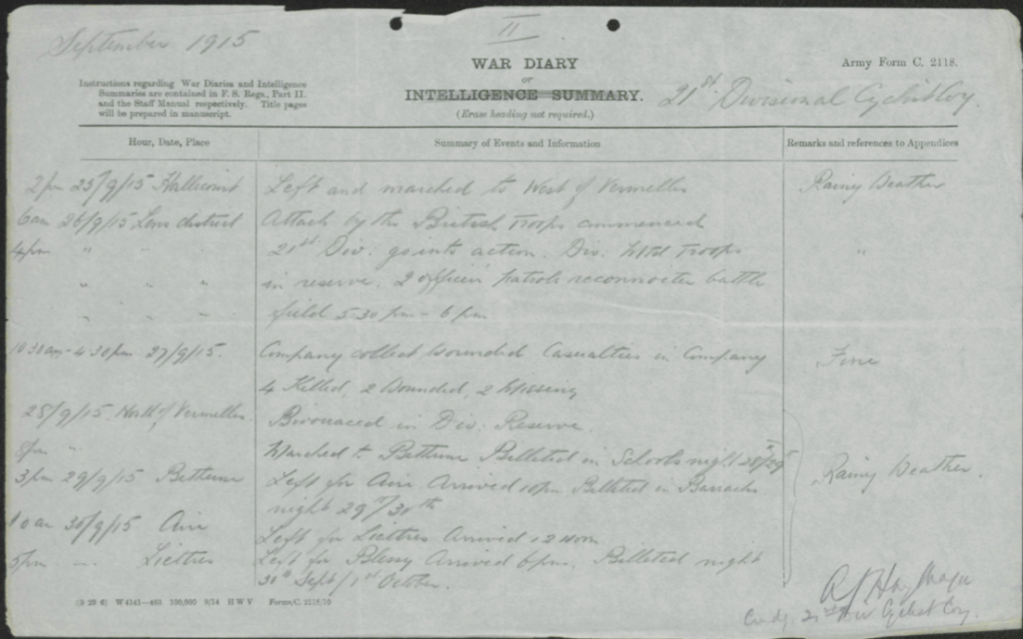
At 6.00 am on Sunday 26th September Unit Diary records that DCC are in “Lens District”, and “Attack by British Troops commenced”. “Lens District” is fairly vague but it suggest DCC had moved up with the rest of the Division. It seems unlikely that 21st Div CC were to the front of this general advance: Unit Diary records “Div Mtd Troops in reserve”. At 4.00pm the diarist states simply “21st Division go in to action.” It is not clear if this meant whole division or DCC. Cherry has the remnants of the Division picking their way back to Le Rutoir from 2:00pm. The diary records – “2 officers patrols reconnoitre battlefield” 5.30 – 6.30pm. No further details of DCC’s first experience of the battle are given but the entry for the next day, Monday 27th, notes: “between 10.30am and 4.00pm “Company collected wounded casualties in company, 4 killed, 2 wounded, 2 missing.”
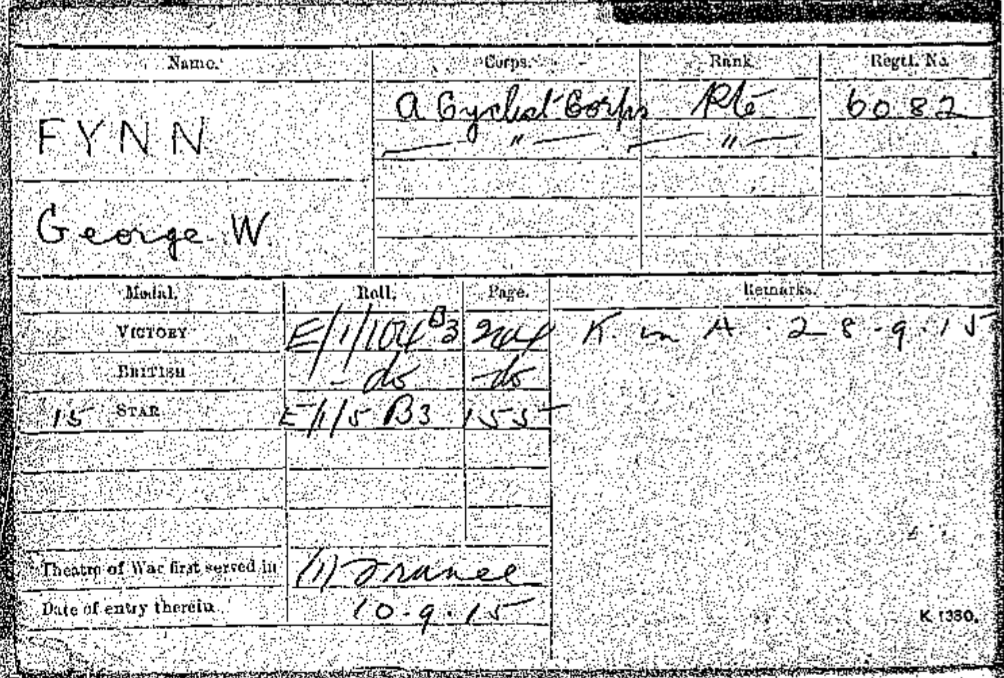
On Tuesday 28th September the Officer Commanding DCC listed George William as one of the missing: “in the field” (Casualty Form – Active Service, George William, Service Record). The form is later updated to Killed in Action on the 28th Sept. His burial at Le Rutoir is recorded for Wednesday 29th September. There were four 21st DCC burials at Le Rutoir shown on reburial records with dates 28/09/15: 6082 Fynn (shown as 25th but this looks like a typing error – as not recorded in Unit Diary) along with three of his comrades: 7027 Richardson, J.A., 5922, Buckley, J. and, 685 Whelan C..
Leeds Mercury
A week later George William’s death was announced in the Leeds Mercury. The entry reports that he was “killed last Monday whilst assisting in the removal of wounded from the trenches. He was struck by a shell, which also killed two of his comrades.”
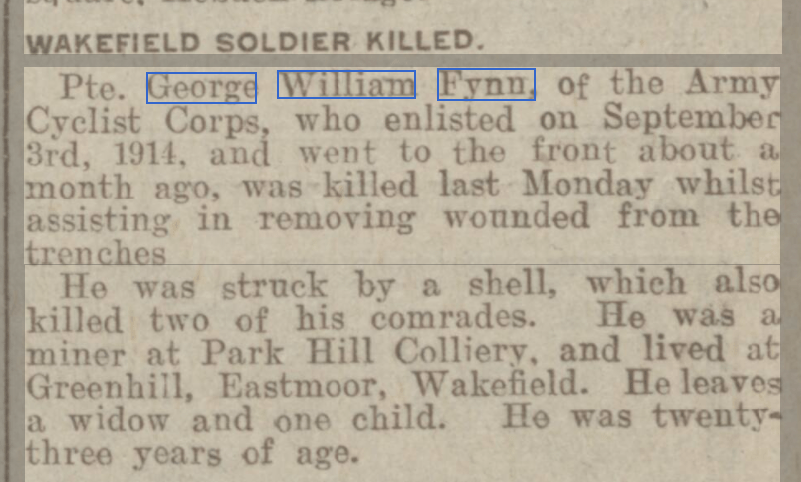
The sad news was probably communicated to Mary first in a letter from the Officer Commanding; the letter did not survive in family possessions and was probably lost when Mary cleared out during one of many moves in her subsequent life.
Post Script
Record of forms returned (9/11/15) add the remark that “No Will or small book”. Later Mary ask about his gold wedding ring that was not returned with his personal possessions. Later records correct this date to 28th (but see Unit Diary). He was buried at Le Rutoir cemetery during the battle and later exhumed and reburied at Dud Corner Cemetery, in the early 1920s. Records – probably taken from the cross at Le Rutoir prior to final grave detail report show George as a Lance Corporal and not a Private. The personal Effects Form dated 27th December 1915, in George William’s army record, also describe him as Lance Corporal, whatever the truth of his rank, it did not make to his head stone.
NB. Battle of Loos was Lord Kitcheners response (ref Gilbert) to immense losses on the Eastern Front by the Russians and the gains made by the German advance; it also served to support French initiative further South. Strategy was to apply significant force on the Western Front to ease pressure on the Russians. Cherry in “Most Unfavourable Ground” suggest Loos was not a good spot and Gilbert suggests that there is evidence that munitions were not ready. Cannon Fodder: – Wilfred Owen wrote prelude to “Anthem for Doomed Youth” whilst in training at Witley in 1916. GWF was most certainly the Doomed Youth trained in a year, not exposed to fighting or artillery prior to the “big push”, marched to the front to take part in a poorly organised and devised battle and killed.
http://www.21stdivision1914-18.org/
(http://www.1914-1918.net/koyli.htm). Part of 64th Brigade. 9th & 10th (Service) Battalion Sept 1914 Both formed at Pontefract as part of the Third New Army (K3)
(http://www.tudorrow.com/202battalion/witley.html )
9th September 1915 Unit War Diary.
 Genealogical Jigsaw