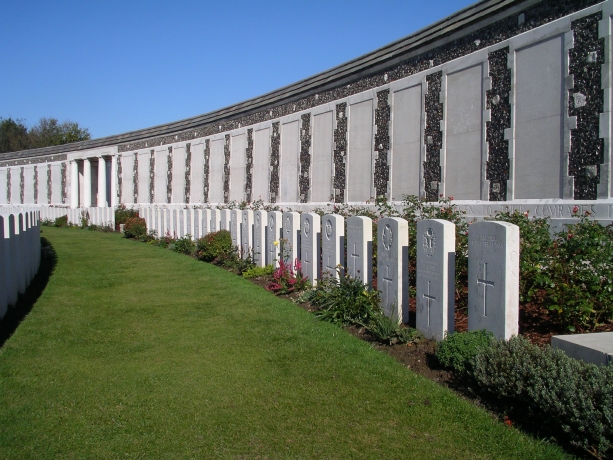
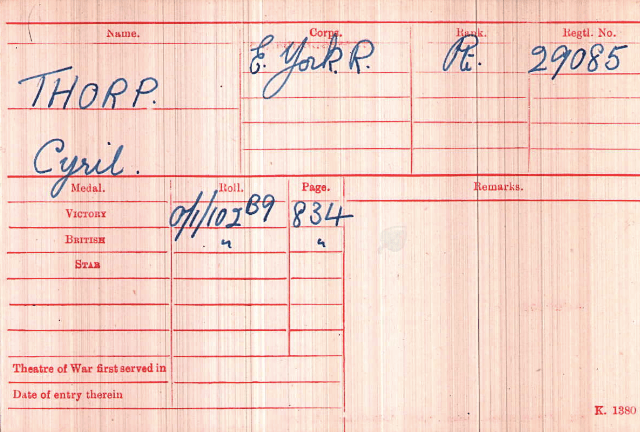
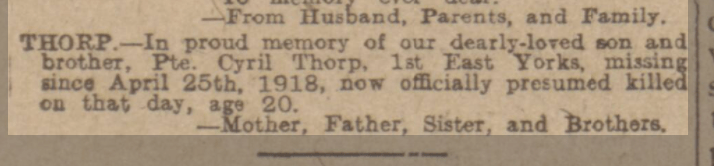
Cyril is my first cousin, twice removed – my Great Grandfather’s brother’s son, my Grandfather Tom Thorp’s cousin and contemporary of a similar age. Both grew up Wadsley, Sheffield. Cyril was killed on or around 25th April 1918, aged 19, somewhere in the Ypres Salient probably a casualty of the German Spring Offensive, (possibly the Battle of Lys). His sacrifice is commemorated on the Tyne Cot Memorial to the Missing along with with 33,783 comrades in arms from the United Kingdom and a further 1,176 New Zealanders. He either joined, or more likely at this stage of the war, was conscripted to the army under the Military Service Act 1916. He appears to have joined up with the East Yorkshire Regiment 27 July 1916. Details in his service papers indicate he was initially placed with the 10th IRB – Infantry Reserve Battalion. He was posthumously award the British War Medal and the Victory medal in 1919.

Early Life and Work
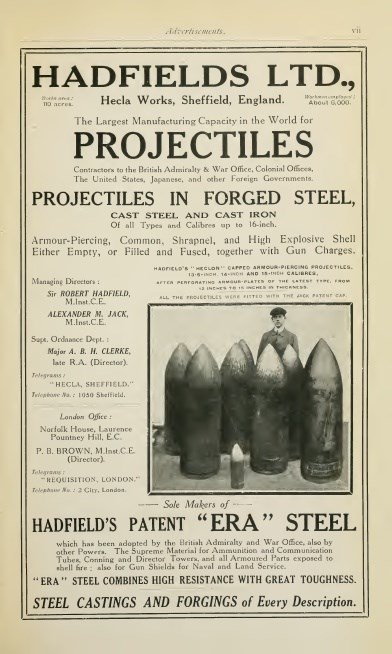
Cyril grew up in or around Malin Bridge, Sheffield, first in Providence Road and later 52 Laird Road. His cousin Tom Thorp and several others lived and worked in the area since their mutual paternal Grandfather, William Henry Thorp, had moved to Langsett in 1860. Up to the 1911 census the 12 year old Cyril was still at school but would most likely have left education that summer to begin work. Cyril’s service record suggests he did not take up the family trade of plumber, or he moved into factory work at some point as his occupation at the time of enlistment is given as “Shell Bore Tapper”, or alternatively, “Fitter and Turner”, most likely working in a National Shell or National Projectile Factory, such as, nearby Hadfield’s Hecla Works. Hadfield cast and finished projectiles before shipping to National Filling Factories where the explosives and detonators etc were added.
Enlistment and Service
Losses on the Western Front during 1915 and 1916 created a huge demand for recruits that could no longer be met from volunteers alone and led to the Military Services Act in January 2016 to enable conscription of 18 year olds. Cyril enlisted on 27th July 1916, he was aged 17 years 11 months, 5′ 8″ tall, had a chest measurement of 35.5inches and was described as in “good health”. Why the East Yorkshire Regiment we don’t know. On enlistment conscripts were assigned to one of 116 Reserve Battalions organised in to 26 Brigades. The Reserve Battalions were introduced to cope with the large influx of volunteers from September 1914. Until September 1916 these units were more closely connected to their parent regiment but less so once conscripts were drawn in. The East Yorks like many other regular army regiments formed new army Pals Battalions with men drawn from close geographical areas. Heavy casualty rates throughout 1915-16 required conscripts who were naturally drawn from further afield. It is not clear which Reserve Battalion Cyril was assigned to possibly 14th East Yorks (90th) or 15th (91st) East Yorks and York & Lancs.
Cyril’s Service Record suggest he spent some time in Sheffield as he had a medical there on 5th February 1917 (now aged 18). It is quite possible he was first stationed at Lodge Moor Training Camp (Redmires Training Camp) west of Sheffield. The camp was originally set up to house the Sheffield City Battalion or Sheffield Pals (York & Lancashire Regiment). His next move followed that of the Sheffield Pals to Rugeley, Channock Chase for basic training until mid August. Rugeley was a large camp – a small town – capable of accommodating and training 40,000 men. We don’t know what Cyril made of Rugeley and his first experience of armed service. Previous occupants had comprised “pals battalions” – groups of men from the same villages, workplaces etc who had grown up together and knew each other. The East Yorkshire Regiment as its names suggests took its draft largely from the East Riding, including the Hull Pals, whereas Sheffield, Cyril’s home town, was firmly in the West Riding. Conscripted soldiers were by contrast thrown in to an unfamiliar world with unfamiliar faces. Rugeley was designed to turn out infantry soldiers. The British Army’s approach to warfare at this time relied on drill and iron discipline, a facet of army life that would be come all to real as he moved towards the front. In many respects training appears to have differed little from of any infantry soldier from the 17th Century. Haigh and the top brass were still marching lines of men on foot in to oncoming fire on the basis that if the ranks hold, enough troops will break through the enemy line to take ground, equipment and prisoners. The casualties of drill and discipline began its seems before some reached the front line.

France
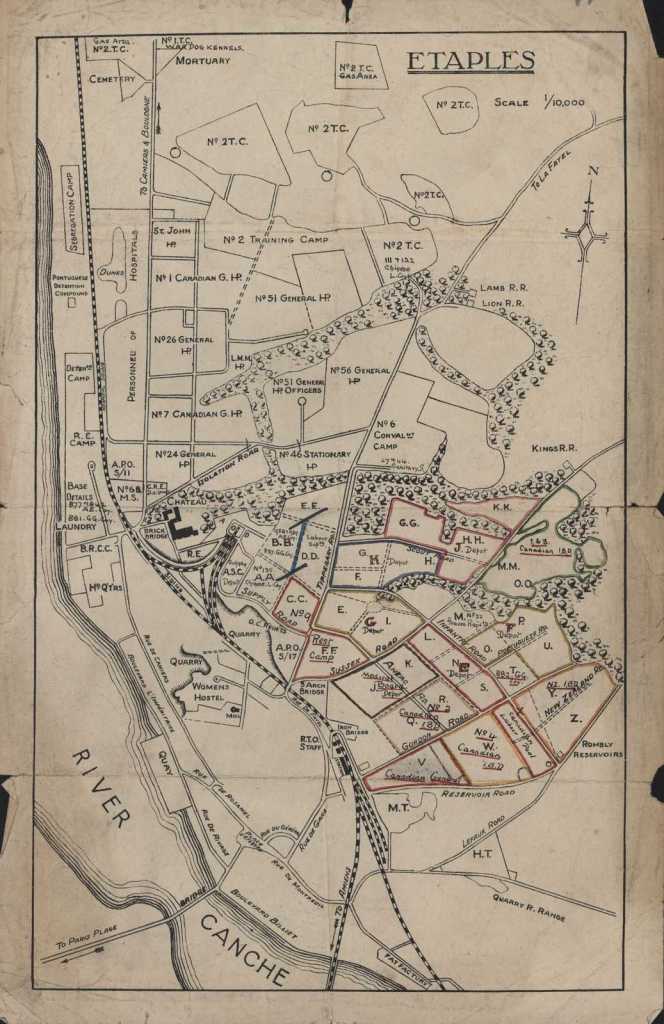
Cyril’s unit left Rugeley for Folkestone where, on 14th August 1917 he embarked on a troopship that docked the following day in Boulogne. The trip through England, and the cross channel trip to France must have been to some degree exciting after Sheffield. His next stop the “33rd Infantry Base Depot” at Etaples would have been a culture shock, further opening his eyes to the realities of war and soldiering. Etaples was a huge camp in 1917, located between dunes and marshes of the Canche estuary and housing some 100,000 soldiers from all over the commonwealth. Here infantry received additional training in trench warfare, gas attacks and further physical conditioning.
Mutiny
Cyril’s Service Record shows he was transferred and posted out of Etaples to the 1st Battalion East Yorkshire Regiment on 25th August 1917. Two weeks later on 9th September soldiers at Etaples mutinied. He would certainly have been in camp as tensions mounted through the hot summer months. According to Vera Brittain, serving in the Voluntary Aid Detachment in the camp at the time, the mutiny was caused by repressive conditions and provoked by the military police. Revolution was also in the air: the Russian army had effectively mutinied, withdrawn from the conflict and overthrown the Tsar. The British authorities would have been acutely aware of the implications and would act swiftly. The Etaples mutiny was put down by October, with those arrested facing court martial and stiff sentences with at least one solider, Corporal Jesse Robert Short of the Northumberland Volunteers, being shot for “Attempted Mutiny” on 4th October 1917 in Boulogne. These events must have been strange and shocking to young Cyril. Wilfred Owen, the war poet serving with The Manchesters, when travelling back to the front some months later in Spring 1918 reflected on the mutiny and wrote:
I thought of the very strange look on all the faces in that camp; an incomprehensible look, which a man will never see in England; nor can it be seen in any battle but only in Etaples. It was not despair, or terror, it was more terrible than terror, for it was a blindfold look and without expression, like a dead rabbit’s.
Wilfred Owen, March 1917.
Whether Cyril wore the expression of a dead rabbit we don’t know, he would hardly have been unaware of the tensions that led to the mutiny and he and his comrades would have been increasingly aware that the military machine was relentlessly pushing them towards the horrors of the front.
Joining 1st Battalion
During August 1917 the 1st Battalion EYR was serving with 64th Brigade, 21st Division in the front line on Somme, south of Arras but their tour there, after heavy losses was drawing to a close. The plan now was to rebuild and train the battalion as they moved north to take part in the Third Battle of Ypres – Passchendaele. A case of out of the frying pan and into the fire. On 26th August 1st Btn moved from the front line to huts at Boisleux-au-Mont, and received a draft of 32 O.R. Again on 27th August the Battalion diary notes a further “Draft of 158 O.R (other ranks) arrived.” Cyril was almost certainly one of the new recruits. The following day the Battalion moved to Simencourt to the north west of Arras for training and a few days later on 30th August the new draft were inspected by the Brigadier and the Divisional Gas Officer, who checked their Box Respirators. The following day the platoon received “training with special attention to Trench to Trench attack.”

The next two weeks at Simencourt were spent with training and sports. A draft of 190 new recruits to the Battalion represented a high percentage of its strength and it would be necessary to build up esprit-de-corps, trust and competency before further engagement with the enemy. New attacking tactics being employed in the Ypres salient also required training and practice. In the summer of 1917 the 1st Btn appear to have been patrolling, raiding and holding front line positions, now they were to be engaged again in attacking enemy positions. The full frontal attacks of 1915-16 had proved to be costly in terms of human life and largely futile in turning the tide or winning ground. The new approach before the winter of 1917/18 set in, was to “bite and hold” positions: narrow, limited advances that could be held against counter attacking troops. On 16th September it was time to move from Simencourt and north to Hazebrouck through a series of billets and extensive training before Cyril’s first battle.
The Battle of Broodseinde
Cyril’s first experience of frontline action was almost certainly the 1st Battalion’s engagement during The Battle of Broodseinde, east of Ypres, on 4th October 1917. Historian’s now judge Broodseinde to be the most successful attack during the Third Battle of Ypres employing as it did the tactical innovation of “bite and hold”. A full account of the 1st Btn’s engagement can be found in the Unit War Diary or Everard Wyrall’s re-telling in The East Yorkshire Regiments in the Great War. We don’t know which company Cyril joined but all three companies of 1st Btn entered battle at 7:45am on 4th October as part 21st Division, 64th Brigade on “the right” – the boundary with 5th Division in front of their objective Reutel. The Reserve Company following on behind.
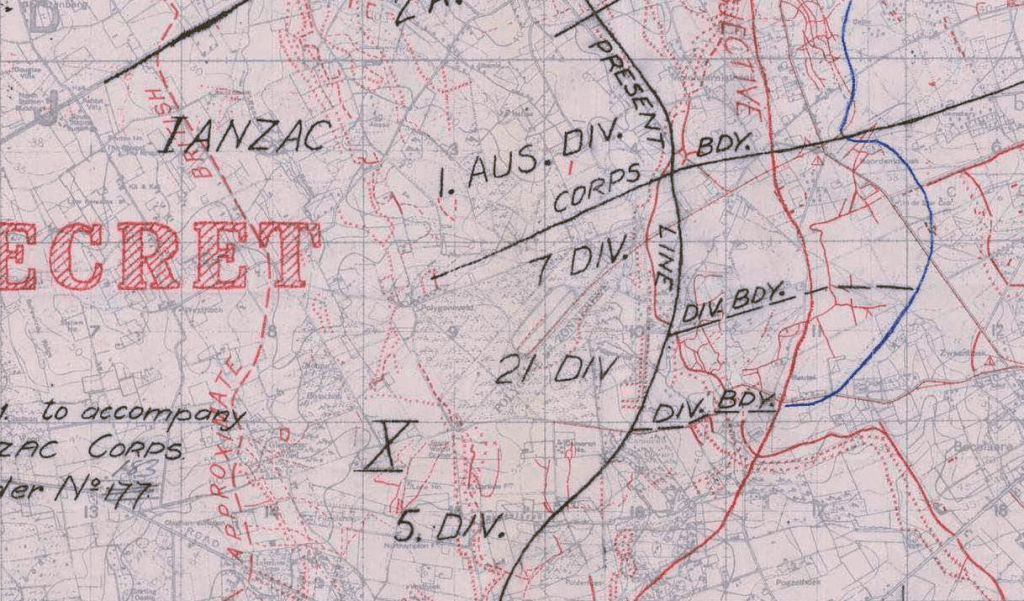
Objectives were achieved, Plumer described Broodseinde as “the greatest victory since the Marne” and the German official war history (Der Weltkrieg) as “the black day of October 4”. However, casualties were high. British losses were ~21,230; The Second Army lost 12,256 with 2,616 in the 21st Division. 1st Btn strength in Other Ranks was 615 but all four companies suffered heavy casualties,: 36 other ranks killed with a further 73 missing most of whom would join the fatalities; 172 were also wounded. Nine officers were either killed or wounded. On the night of 6/7th October 1st Btn left the line and assembled on the “railway embankment south of Zillebeke lake.” There is nothing in Cyril’s Service Record to show he was one of the wounded.
Winter 1917-18
- Lynde then 23rd Oct Point Farm and Clapham Junction
- 26th Oct – 10th November Second Battle of Passchendaele
- 20th November 6th December Bullecourt Battle of Cambrai
- December 1917 Peiziere, Vaucelette Farm, Epehy tours
Spring 1918 The German Offensive -Picardy
- 21st-23rd March First Battle of the Somme – Saulcourt
- 24th March First Battle of Bapaume
- 25th March Talus Boise
- 2nd April move from Somme to Locre en route back to Ypres.
- The second Battle of Kemmel 25-16 April
Commemoration
 Genealogical Jigsaw