Sometime in the early 1870s James Paul stepped out from the family home at 21 Clyde Street (now Abercromby Street), Calton, east Glasgow for pastures new. He was 18 and listed his occupation as Paper Box Maker. What spurred James on we can only speculate: a family row, adventure or bettering his position?
Crowded House
The Paul household, in 1871 was as usual in Victorian Britain large, busy and shoehorned into a small house or tenement. James Paul snr. and Isabella his wife shared the home with their eldest son Thomas (30), his wife, also Isabella (32), James jnr. (18), George (16), William (14) and Sarah (11). James snr. was a handloom weaver originally from Barony, Glasgow. Records suggest James snr. followed his trade at various locations around Glasgow before settling in 29 Newhall Street, Bridgeton in the late 1850s. James jnr. was born in 1853 during a spell in Kilbarchan, Renfrewshire, a centre of the dwindling handloom weaving industry. In the 1861 Census James snr. still described his occupation as “cotton hand-loom weaver”, however, it seems likely that that he now worked as a power loom operative in the Weaving Factory at the end of Newhall Street (see below).
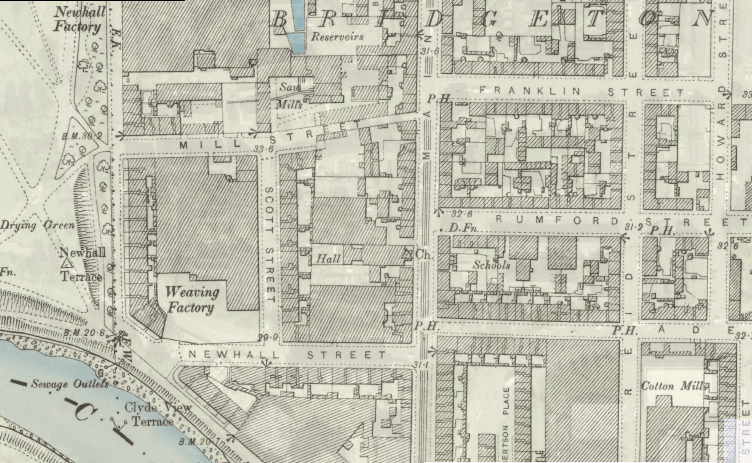
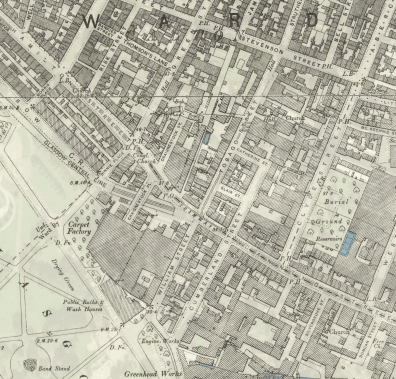
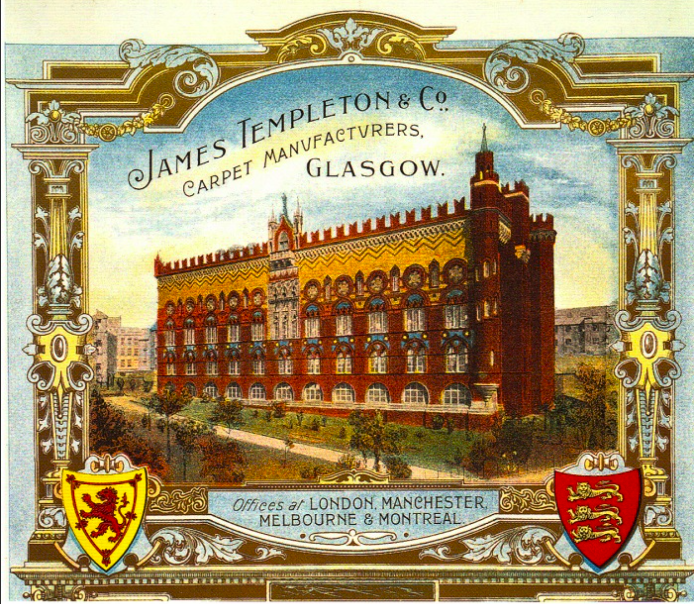
Ten years later when living on Clyde Street, James snr. describes his occupation as “Carpet Weaver”. His place of work is not stated but would almost certainly have been at James Templeton & Co. Carpet Factory to the east of Glasgow Green. Clyde Street is a few hundred yards to the north east.
James jnr did not it seems follow his father into the weaving trade, nor did his older brother Thomas, whether through choice, lack of opportunity or ability we’ll never know. It is doubtful that paper box maker brought in much income or carried much status: before mechanisation in the 1870s, this was outwork, sweated labour usually carried out in the home by girls and women. Perhaps this spurred him on? His brother Thomas had started work aged ten in Kilbarchan as a “pirn winder” but again didn’t follow his father into the trade and through the 1860-70s worked as a porter and warehouseman.
Go South Young Man
By the early 1870s the British economy was beginning to hit some headwinds and would enter the “Long Depression” from 1873. It may have been this early turbulence that led James jnr. to head South for new opportunities. Why Sheffield is unknown but the area he appears to have settled, Attercliffe in the Don Valley was home to rapidly expanding steel and engineering sectors. When he arrived we don’t know but in 1876 he married Elizabeth Brownhill and was able to describe his occupation as “Engine Fitter”. His fortunes seemed to be improving.
 Genealogical Jigsaw